





This is an archived article that was published on sltrib.com in 2010, and information in the article may be outdated. It is provided only for personal research purposes and may not be reprinted.
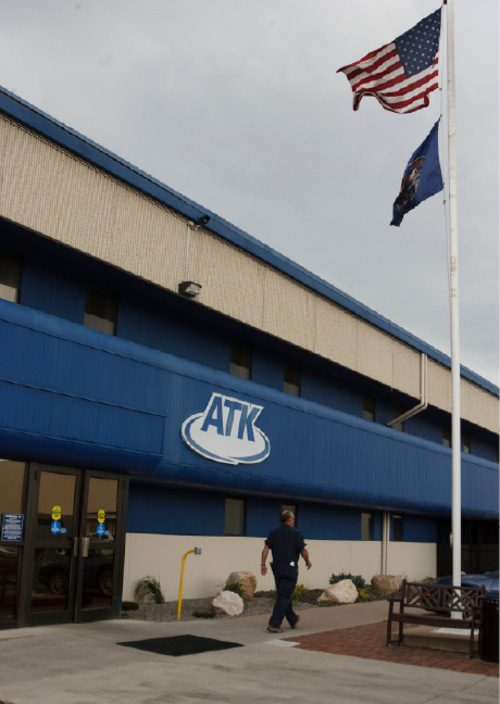
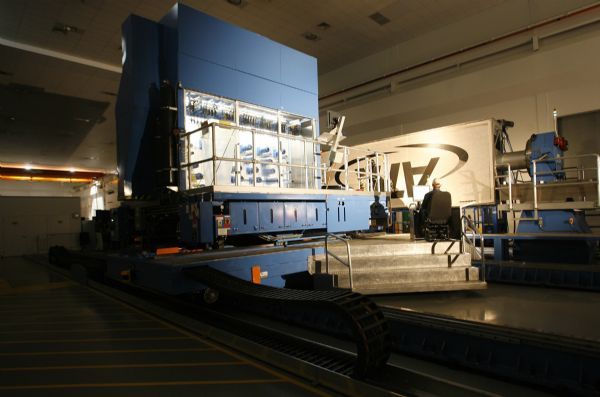
Clearfield » The first of three new high-tech machines that will precisely apply layers of fiber-composite material in building parts of military fighter jets -- leading to 120 new jobs -- was formally unveiled Thursday by Alliant Techsystems.
Development of ATK's advanced fiber-placement machines will accelerate production of the F-35 Lightning II -- also known as the Joint Strike Fighter -- the Department of Defense's next generation of strike aircraft weapons systems for the Air Force, Navy, Marines and U.S. allies.
With the machinery it developed, ATK Aerospace Systems will add the 120 employees to an existing staff of 600 at its operation in Clearfield's Freeport Center. They will use the computerized equipment to create about 250 sets of upper and lower wing-box skins and engine enclosures for two versions of the F-35: one that takes off and lands like a conventional airplane, the other that makes vertical take-offs and landings more like a helicopter.
ATK engineered the machines and is building the fighter parts through a $240 million contract from Lockheed Martin, the government's prime contractor on the F-35 program, with assistance from the Air Force Research Laboratory at Wright-Patterson Air Force Base in Ohio.
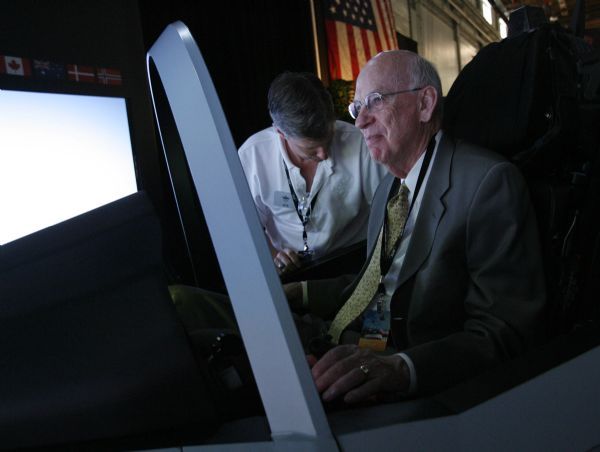
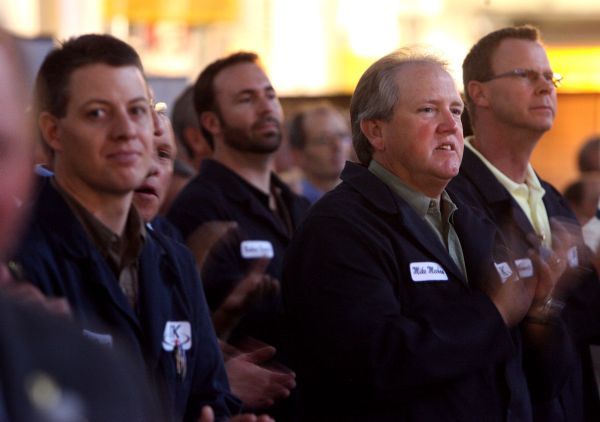
Thursday's unveiling of the first fiber-placement machine was marked by a ribbon-cutting ceremony and speeches by outgoing Sen. Bob Bennett and Rep. Rob Bishop.
"You are on the cutting edge of the future here in Utah," said Bennett, calling the creation and use of fiber-composite materials one of the most important advancements in aircraft technology since the Wright Brothers designed the basic structure of the plane a little more than a century ago.
Bishop hailed the development of the "lighter, faster, tougher, heartier" aircraft as "essential to the future defense of this country." He expressed confidence in ATK's ability to "get it right," based on the company's 50-year history of manufacturing composite structures for aerospace and defense applications and its work since the mid-1980s in pioneering the development of automated fiber placement technology.
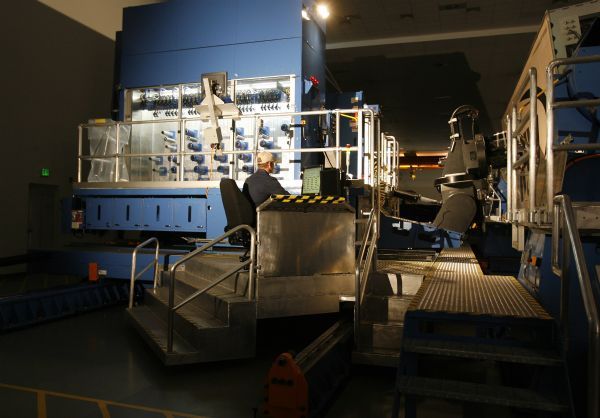
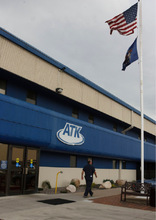
The high-tech machine on display Thursday looked like it was putting a layer of paint on an ATK logo. But it wasn't paint. It was actually a thin fiber composite, one of about 130 layers that will go into making the "skin" of a wing.
A technician sitting at a computer screen manipulated a cone-shaped nozzle that applied the composite to the existing surface. His commands were routed through multiple sets of wires within a large rectangular box that moved back and forth on tank-like treads.
ATK spokesman George Torres said the machine's reactions to the operator's commands were engineered into the system by some of the 60 people hired so far. The other 60 jobs will be filled during the course of the contract, which continues through 2015.
Torres indicated some positions will employ ATK workers previously assigned to the company's space systems division in Box Elder County, where several large layoffs have occurred. But differences in skill sets made it difficult to transfer many personnel from one division to the other, he added.
Overall, ATK's production role will expand to 16 different structures for the F-35, a single-seat, single-engine stealth fighter.
Production began in October 2002, with a system design and development contract for 19 sets of the 35-foot composite upper wing skin.
A second phase resulted in the production of 41 additional sets.
The new contract, which lasts through 2015, will produce 250 more sets.
ATK received a separate $10 million contract in April from Northrop Grumman to manufacture composite inlet ducts that direct air into an engine.
Source: Alliant Techsystems