


This is an archived article that was published on sltrib.com in 2015, and information in the article may be outdated. It is provided only for personal research purposes and may not be reprinted.
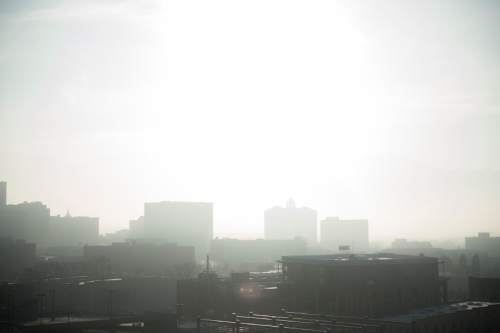
When Utah's winter air is "so bad you can taste it," cyclist Chuck Heaton wears a respirator for his 9-mile commute.
The same damp air the 39-year-old engineer is breathing has new power to help scientists understand Utah's inversions.
Water vapor could indicate which sources pollute the most during inversions, researchers at the University of Utah have found. It could also help map smog levels along the Wasatch Front.
The research is notable because it's the first time scientists have tapped water vapor as a tool in studying air quality, said Gabe Bowen, lead author of a study published online Monday in Proceedings of the National Academy of Sciences.
"We have some hints," Bowen said. "There's a lot of potential to use it to improve our understanding of urban air pollution."
Fuel-burning sources create the mist as a byproduct, with cars and furnaces emitting the most. The combustion vapors have a slightly different "fingerprint" than typical clouds do, Bowen said, so scientists deciphered which water molecules came from polluting sources as opposed to routine fog.
In Salt Lake City, the team found, levels of the sooty vapor tend to peak just after morning rush hour and rise again overnight as home heaters fire up.
Scientists could tell which sources are giving off the most: Cars, furnaces and industry sources each leave different prints on water vapors.
Researchers compared levels of certain elements in the water from December 2013 to January 2014. A tiny box atop a geology building at the U. trapped air samples every five minutes, then shined a laser through them to determine their makeup.
The research team originally set out to study the ways wind transports water vapor. The smog insight "was kind of a surprise," Bowen said.
The vapor stays relatively close to the ground. It lingers under a warmer blanket of air and is also responsible for making ground weather damp and chilly during inversions.
A grant from the National Science Foundation paid for the study, which cost about $20,000, Bowen said. His team is applying for grants to do more research.
Heaton, a father of four, said better health and savings on gas money are his main motivations in biking to work, but doing his part to curb pollution is an added plus.
"I'm all for cleaner air."
Twitter: @anniebknox