




This is an archived article that was published on sltrib.com in 2010, and information in the article may be outdated. It is provided only for personal research purposes and may not be reprinted.
Castle Dale
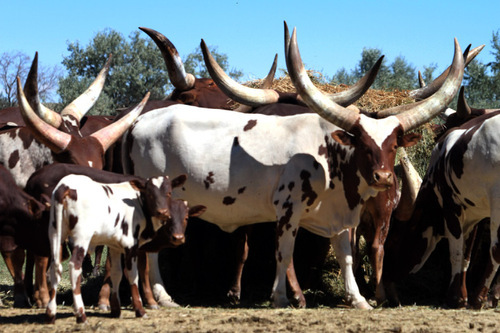
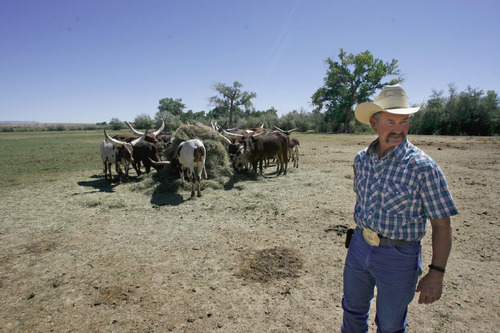
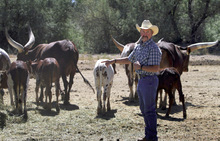
On a warm, late-summer day, a small herd of cattle has bellied up to a tall pile of hay, the calves edging around their mothers to get a bite to eat.
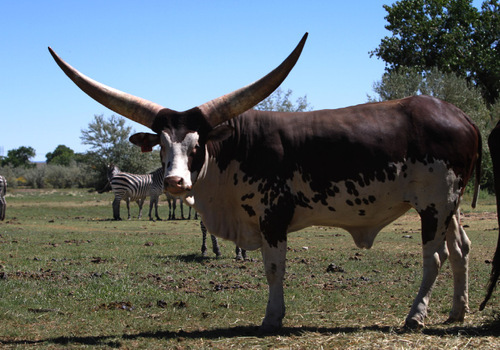
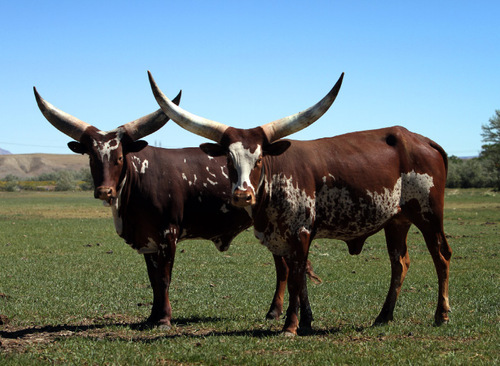
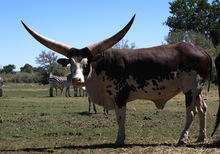
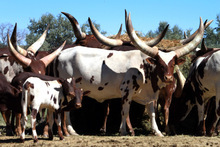
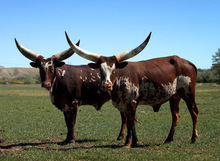
Not an unusual sight on a ranch in Emery County — right up to the moment you see their horns. Huge, sweeping horns that look as if they'd be too heavy to carry. But these are Watusi cattle, bred for eons to be strong of body and huge of headwear.
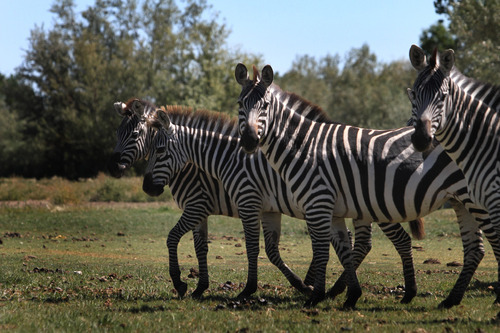
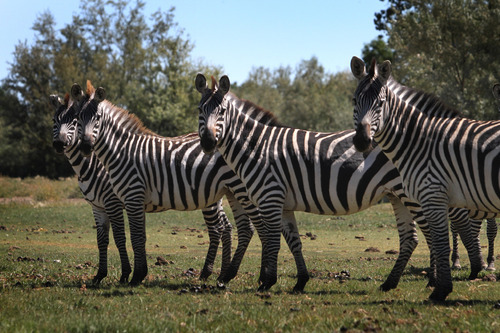
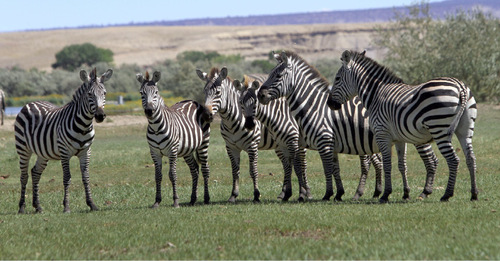
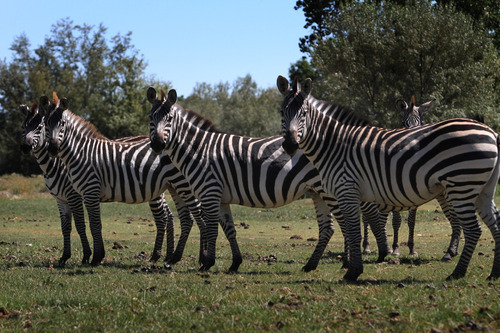
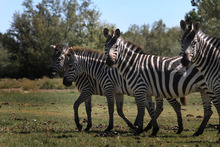
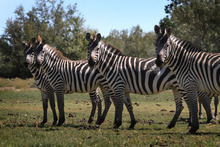
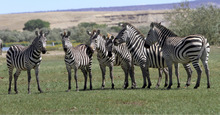
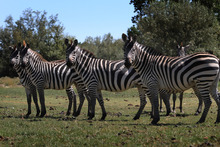
A little farther out are zebras, 30 of them, waiting their turn and wary of strangers who've come to take a look.
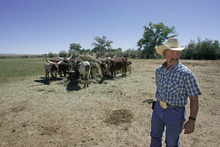
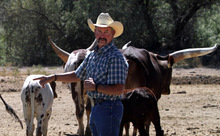
And in the middle of the pasture stands Duane Gilbert, who with his wife, Kolene, has been raising Watusi cattle for 28 years and zebras for 18.
Duane has lived in Emery County since 1970, when he graduated from Bingham High School in the Salt Lake Valley and headed straight for Huntington, where he'd worked on an uncle's ranch during the summer. The couple later moved to Castle Dale, where they've built a comfortable home, reared their children and now like to have the grandkids around as much as possible.
Duane watches the cattle fondly. There's Rosie and Molly and the big bull Kulow. They watch us with interest, but no fear.
Watusi cattle, he tells us, have a lineage that spans at least 7,000 years. They were brought out of Egypt into central Africa by tribesmen, probably during long times of drought. Some pyramids bear carvings of the Watusis, Duane says, with distinctive color patterns that can be seen on some of his own animals.
The Gilberts got interested in Watusi cattle when they saw a magazine article on them.
"We just like stuff that's different," Gilbert says. At the time, the cattle were just coming out of zoos and game farms, and they bought a couple.
Now they're breeders with state and federal licenses, raising purebreds and exhibiting them at places like the California, Kansas and Colorado state fairs.
"They're a show animal," Duane says. "They're animals that people like to have around."
He's also a member of the World Watusi Association, which helps keep the bloodlines straight and has 1,000 head of these cattle on its books. A Watusi can sell for $500 to $5,000, although a special animal can bring in a lot more.
One of Duane's bulls, now gone, set a record for the biggest horn diameter — 42 inches at the base. The biggest one around here has a base diameter of 24 inches.
The zebras came later, when a friend of Duane's told him that if he liked horses, he'd like zebras. And he does, but he's also in it as a business, breeding and selling them to collectors and petting zoos.
"It's a business, but also good business," Duane says. "It's fun, but not a hobby."
Zebras, a member of the horse family, can be gentled and trained to wear a halter. They also can be crossbred, which produces zedonks and zorses, although Duane doesn't do that.
But unlike the cattle, domesticated all these years, zebras are wild. Unless trained, they won't let a person get close or touch them. And, because lions have been chasing them for millennia, they're "born to run," Duane says.
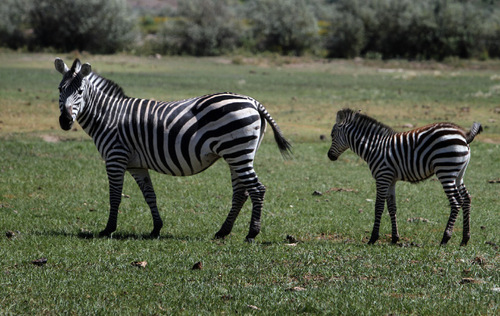
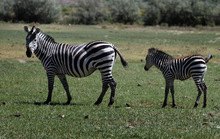
Still, he gives them names — Forkbelly, Pawprint, Tex and Walter. One mare, her youngster at her side, does come a little closer to the hay pile, but only so far. She keeps a close eye on us, although the foal blithely drops and rolls, its little hooves waggling in the air.
As for the question of whether the zebras are black with white stripes, or white with black stripes, Duane has an instant answer. "Black with white strips. Just look at the inside of their ears and their lips — their pigment is black."
A longtime coal miner who now works as a construction supervisor, Duane keeps the cattle and zebras on about 30 acres of pasture with a big water tank. When he's on shift work, Kolene comes out to feed them.
"They get to like you," he says. "They'll call for you if you haven't fed them. They'll come after you."
So as much as he likes his cattle and zebras, Duane isn't all that sentimental about them. But let's get one thing straight: they're not destined for the dinner table.
"I like a good steak as much as anybody, but I can't imagine eating any of my cows," Duane says. "I can't imagine eating Rosie!"
Peg McEntee is a columnist. Reach her at pegmcentee@ sltrib.com.