


This is an archived article that was published on sltrib.com in 2011, and information in the article may be outdated. It is provided only for personal research purposes and may not be reprinted.
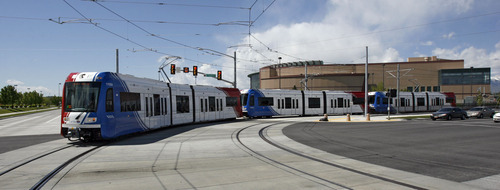
In the Old West, towns along the railroad boomed while those it missed withered. West Valley City is about to join the modern TRAX light-rail system, and officials say it should help make the city a more connected and key player on the Wasatch Front.
"The introduction of light rail is a game-changer for our community," said West Valley City Mayor Mike Winder. "Not only will it increase transit opportunities for our people, but also encourage economic development. I see the TRAX stations as a string of pearls that will attract future transit-oriented development and economic development around them."
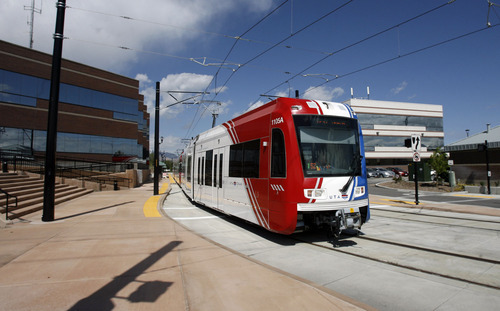
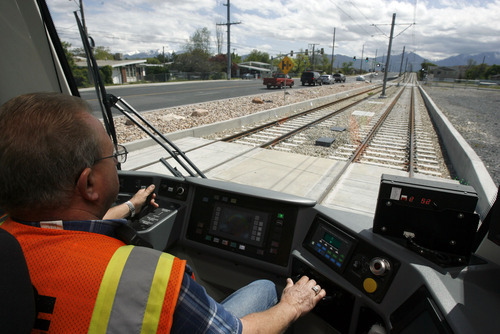
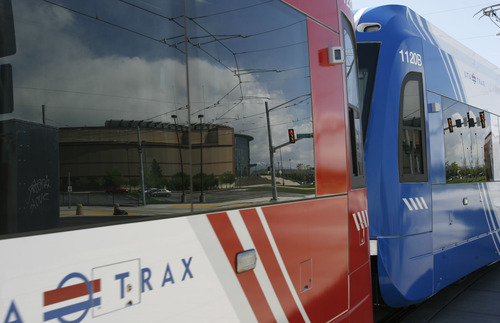
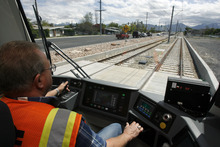
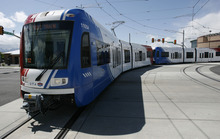
Trains are now running on that new West Valley City line — for testing only. The line is scheduled to open to the public on Aug. 7. Until then, crews are working out any problems and are certifying new operators and equipment.
The new line will extend TRAX service by 5.1 miles from the Central Pointe Station at 2100 South to the West Valley City Central Station just west of the West Valley City Hall.
"Introduction of light rail to West Valley City gives it a premier connection to the rest of the Wasatch Front," said Utah Transit Authority spokesman Gerry Carpenter. "We've always had good bus service in West Valley City. But the new TRAX line there will make it easier for people who live or work in West Valley City to connect anywhere on the Wasatch Front."
And it soon will make it easier for anyone living elsewhere from Ogden to Provo — because of other bus, TRAX and connecting commuter rail service — to go to such places as the Maverik Center or Valley Fair Mall, both of which will have TRAX stops nearby.
Carpenter said that toward the end of June, trains will operate the equivalent of a full schedule as training and testing intensify. "So we encourage people to be extra careful and pay attention to crossings there. The trains will be sharing some streets with traffic," such as 2700 West (Constitution Boulevard), near the Valley Fair Mall.
Besides the stop at the West Valley City Hall, the line will have stops at 3100 South and Decker Lake Drive; on Research Way near Redwood Road; and at 1070 W. 2320 South.
Initially, trains from West Valley City will run to the intermodal hub in downtown Salt Lake City. Eventually, UTA planners say the West Valley line will probably connect directly to a TRAX extension, now under construction, to Salt Lake City International Airport (from the Arena station adjacent to the EnergySolutions Arena).
The West Valley City TRAX extension cost $370 million. It is expected to carry 5,000 people a day at its opening, and 10,500 by 2030.
It is scheduled to offer service every 15 minutes from about 5 a.m. to 11 p.m. on weekdays, and service every 20 minutes with shorter hours on Saturdays and Sundays.
When the new TRAX line opens, many UTA bus lines in the western valley that had traveled to downtown Salt Lake City will be shortened and will instead connect to the new TRAX line. UTA expects by July 7 to post online the new schedules for buses and the TRAX line. Printed schedules are expected to be available by July 18.
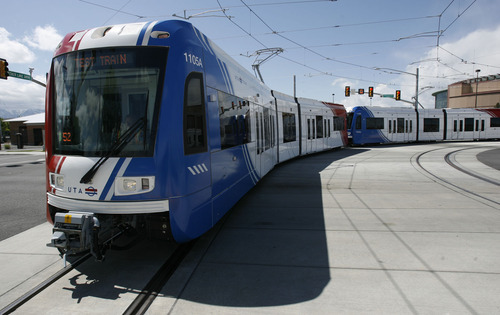
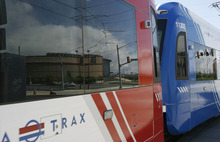
The UTA is buying 77 new TRAX cars — at a cost of $3.6 million each — for the new West Valley and mid-Jordan TRAX lines. That will more than double its old fleet of 69 train cars when the two new lines open on Aug. 7.
Entry to the new cars is level with the platform, unlike cars on older lines that force riders to walk up internal stairs — or to use elevated wheelchair ramps at stations (which are not needed on the new lines).
The cars have seating for 60 people with standing-room capacity of up to 217. Some rush-hour trains have up to four cars. —
Bridge to somewhere
One of the line's unique features is a 780-foot bridge — in three spans — over the Union Pacific Railroad's Roper Yards. Instead of usual fill material such as sand and gravel, the approaches to that bridge used Geofoam, a plastic foamlike material that reduced waiting time needed for settlement and speeded construction, UTA officials said.
TRAX shares that new bridge with a pedestrian and bike trail that will connect to the Parley's Trail. —
TRAX facts
The West Valley line used 18,000 concrete ties, 1,950 tons of steel, 63,500 linear feet of overhead wire, five bridges, seven at-grade crossings and six traction power substations.