


This is an archived article that was published on sltrib.com in 2011, and information in the article may be outdated. It is provided only for personal research purposes and may not be reprinted.
Ask Cindy Medford to name the most unusual thing ever lost on a Utah Transit Authority bus or train, and she has a hard time deciding.
"We had a prosthetic leg once," says Medford, the UTA customer-service manager. "Once a lady had put her wedding ring in her pocket and then dropped it with her change into the fare box. … We actually get false teeth on a fairly regular basis. People take them out, set them in a napkin, and then they get up and leave without them."
She has an easier time when asked what the most common item left behind is:
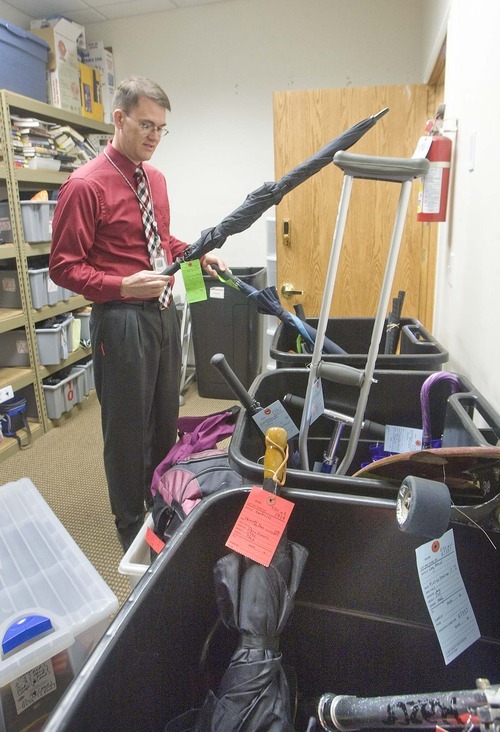
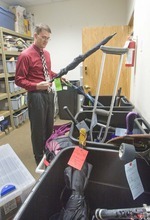
"It's umbrellas — black umbrellas. We get a ton of those."
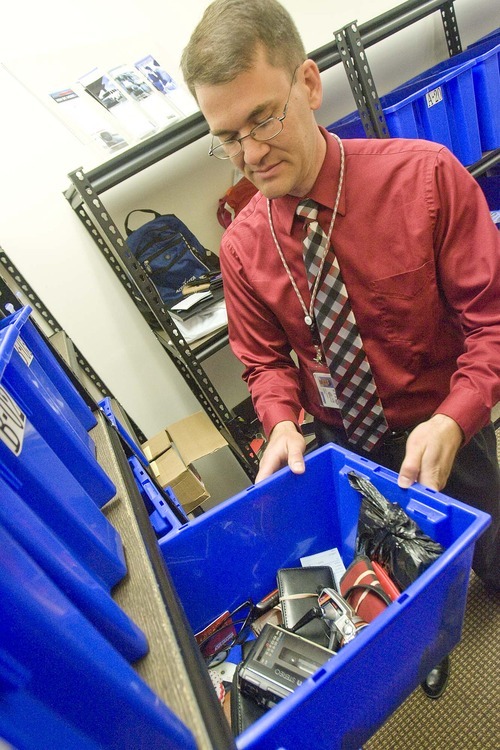
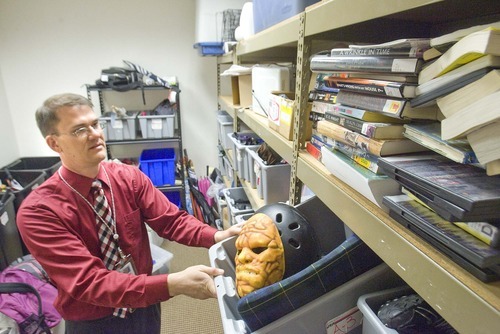
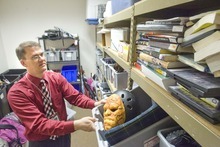
Last year, UTA had 18,547 items turned into its lost and found. It's so much that UTA has developed an elaborate system to track and try to return items to owners — and to figure out what to do with the mountains of goods that are never claimed.
UTA managed to return 3,981 items last year — about one of every five left behind. The rest went to charities, or the trash bin.
Medford says every lost item is logged into an electronic database, and then employees do their best to find owners.
"Whether it's a wallet or a pair of knitted gloves, they are both valuable and important to our customers, so they are important to us."
Things with names and phones numbers — such as wallets containing identification — are the easiest to return.
"We encourage people to put their name and phone number on anything that they carry with them regularly, even if it is a lunch box," Medford said.
Items without clear-cut identification turn UTA employees into detectives.
For example, UTA gets so many cellphones left behind that it bought several different types of chargers for them. "We charge them up and then look for numbers like 'home,' 'Mom' or 'Dad,' and call people and ask if they know who lost the phone," she said.
Medford said she was once trying to find the owner of a leather coat, and discovered a business card inside it with a handwritten phone number.
"I called and asked if he had a friend who maybe lost a coat, and he knew exactly who it was," she said.
When the man's son claimed it, he checked a hidden inner pocket and found that several hundred dollars were still safely tucked inside.
She says UTA finds a significant number of library books and videos.
"We just return them to the library. If people call, we tell them it has been returned," she said. It does the same with Redbox videos.
"The people would have to keep paying if they couldn't come to our office to pick it up quickly, so we just return it."
Employees scour items such as books in book bags, looking for names or other information that they can use to locate owners.
Some items without identification are never sought nor returned.
"We get a lot of keys, and they are rarely claimed," Medford said. "I guess people just don't know where they possibly left them and don't think of the bus or train."
She says UTA tries to be as helpful as possible in making it easy to pick up items and has lost-and-found offices in Salt Lake, Utah and Weber counties.
"We also have made arrangements for customers to meet the bus and get something from the driver" on the route where they had left something, she said. She remembers having a diaper bag returned to a worried mom, who told the driver she had cashed her check and left the money in the bag. It was still there when the bag was returned.
"In the wintertime, people have left their skis on buses. We've made arrangements to mail [them] back to them if they are not in Utah, or had a supervisor take it up to their hotel or the airport," she said.
UTA drivers are even known to pick up items they see on roads such as wallets — and lost-and-found employees track down the owners.
"We'll call them up, and they'll say they weren't even riding the bus and wonder how we found it," Medford said.
If items aren't claimed after two weeks (UTA is about to extend that to four weeks beginning in July), clothing and usable items are donated to homeless shelters.
Eyeglasses are donated to a group that takes them to undeveloped countries. Cellphones go to women's shelters to allow them to make 911 calls. Bicycles are donated to a Boy Scout group that repairs and donates them. Unclaimed items with personal data are destroyed to protect the information.
If any perishable items such as food are left on a bus or train, they are disposed of immediately.
Medford advises people who forget items to call as soon as possible. "We an call the driver, and it increases the chance of getting something back," she said.