




This is an archived article that was published on sltrib.com in 2011, and information in the article may be outdated. It is provided only for personal research purposes and may not be reprinted.
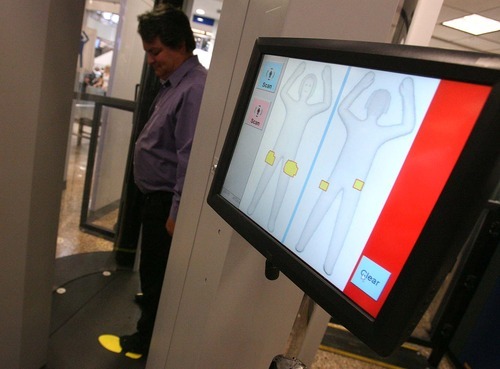
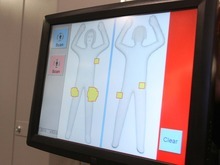
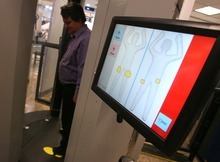
The human image is androgynous, somewhat cartoonish — bereft of actual fingers and toes — and it sports what appears to be a $2 haircut.
But Transportation Safety Administration officials are betting $2.7 million that this is the best way to balance privacy for passengers being screened at the airport and catching terrorists trying to get on board airplanes.
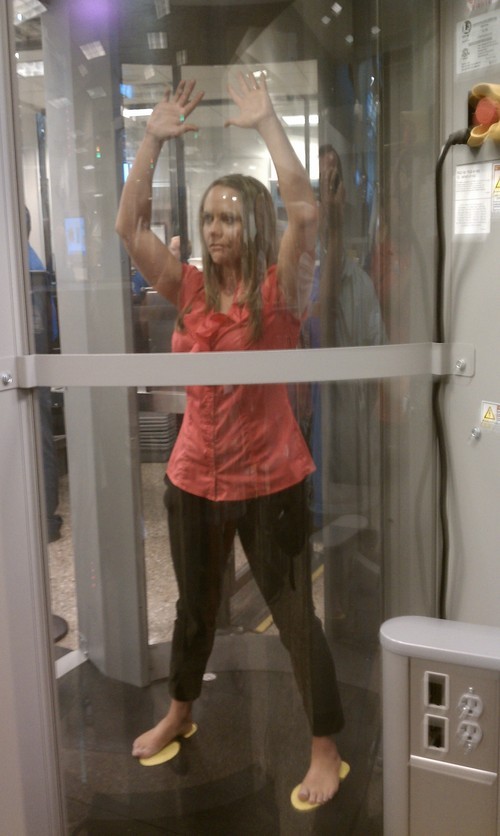
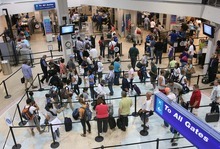
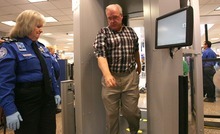
On Wednesday, TSA unveiled at Salt Lake City International Airport — and about 40 other airports — what the agency has dubbed Automated Target Recognition. It is a body scanner that allows passengers to pass through the system in about seven seconds and to also see the image of their scan after they pass through it.
However, if the software doesn't detect metal or plastic on the passenger, no generic outline of the person appears on the computer screen at all. Instead, it simply flashes a green screen with the word "OK" on it.
Previously, images were viewed by TSA screeners in a separate room and there were complaints they were too detailed and revealing in nature. There were also concerns about the images being stored, though TSA officials maintain that the images are deleted once the person passes through the detector.
The move to the new imaging software comes after TSA took a lot of heat for the previous technology that some felt was too invasive and revealing. And among those leading the charge was Rep. Jason Chaffetz, R-Utah.
In March, Chaffetz posted his desire to ban the advanced imaging technology and called them the "equivalent of a strip search."
"Nobody needs to see my wife and kids naked to secure an airplane," he said in the statement.
He sponsored a bill to ban full-image body scans in 2009 that passed the full House but died in the Senate.
A second bill, meant to address concerns there may be health issues in submitting to the scans, would stop the usage of the machines until the National Academy of Sciences determined it was safe. That legislation has been referred to the House Subcommittee on Transportation Security.
TSA officials have publicly said the scans are safe. There has also been some dispute as to how revealing the old technology was, but TSA Federal Security Director Vera Adams said the agency was sensitive to some of the outcries.
"We really do want to address the public concerns," Adams said. "We want their buy-in to our technology and we want them to be comfortable using it."
Chaffetz, who is on vacation with his family, was not available for comment.
But travelers at the airport seemed a bit ambivalent about the new technology and the steps taken to ensure privacy.
Harriet Rashand, who was dropping her daughter off at the airport, said it wasn't a big deal and that Chaffetz might better spend his time focusing on other things.
"I think there are other things for him to worry about," Rashand said.
And her daughter, Marcie Baker, said she never felt the old machines were that intrusive.
"It's the pat-downs that are worse," she said.
TSA spokeswoman Carrie Harmon said "targeted pat-downs" could occur if the software detected an item on the passenger.
During a demonstration of the new imaging software, items planted on TSA employees were identified on the scan as jagged-looking puzzle pieces.
"The purpose of the machine is to detect something on the person," Harmon said. "It doesn't know what it is, though. It just tells us this could be a targeted pat-down."
Adams said the new software has been in development for the past year. She said TSA screeners began training on the new system Sunday.
Twitter: @davemontero