


This is an archived article that was published on sltrib.com in 2011, and information in the article may be outdated. It is provided only for personal research purposes and may not be reprinted.
Jensen • In dinosaur time, the five years that the Quarry Visitors Center has been closed is just a blip.
But the fact that the world-famous collection of exposed bones on a wall at Dinosaur National Monument has not been open to the general public since 2006 had saddened dinosaur lovers, paleontologists and Vernal-area tourist businesses.
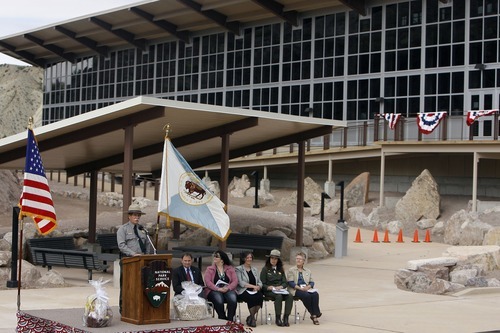
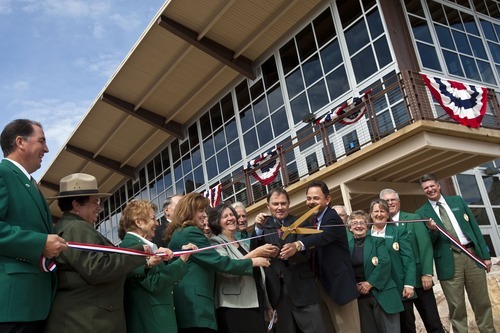
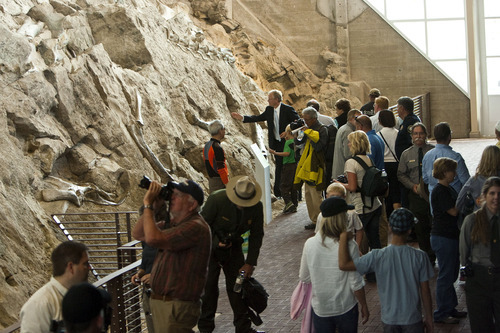
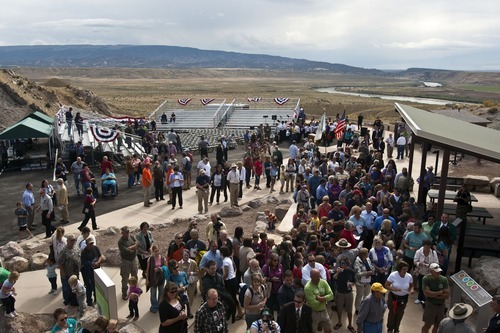
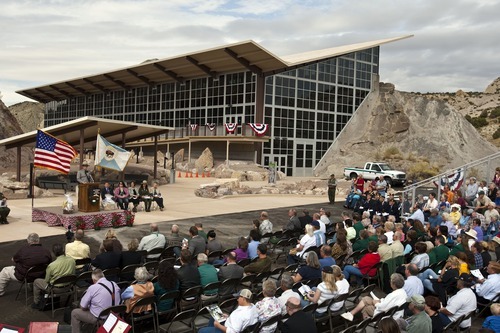
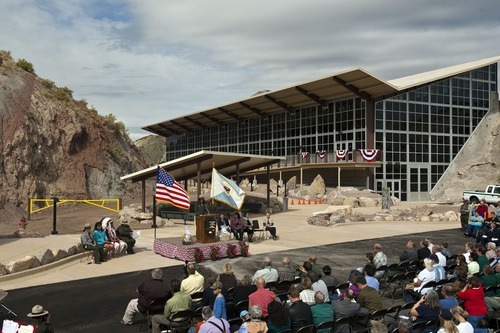
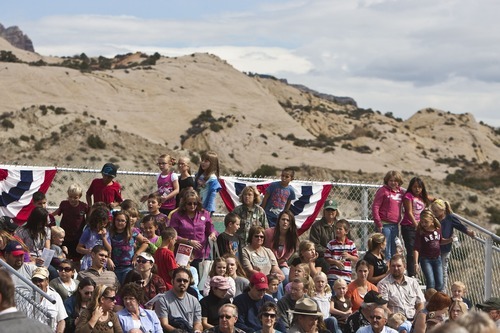
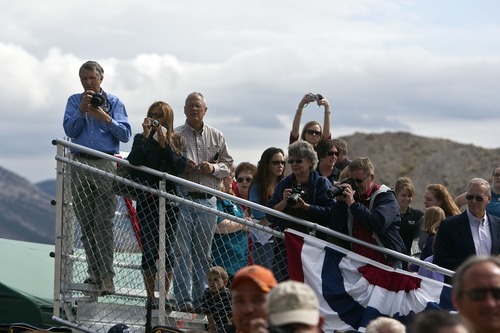
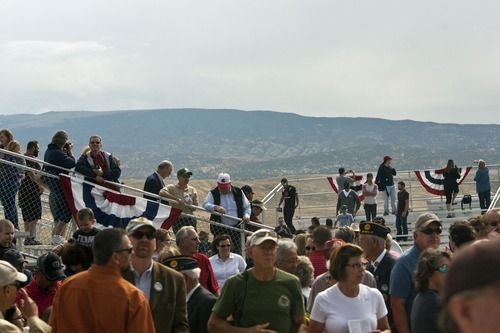
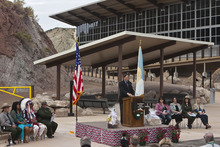
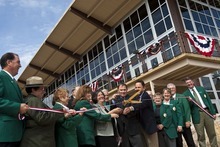
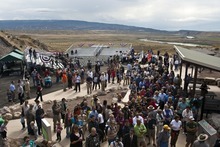
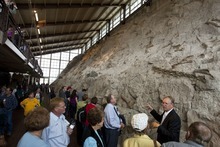
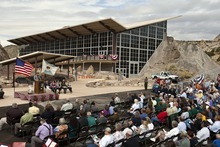
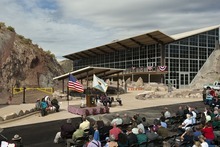
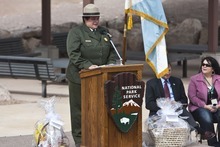
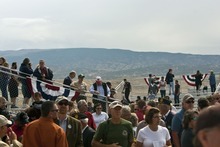
All that changed Tuesday when the newly refurbished quarry opened to the public, the 96th anniversary of when President Woodrow Wilson created the monument to preserve these bones.
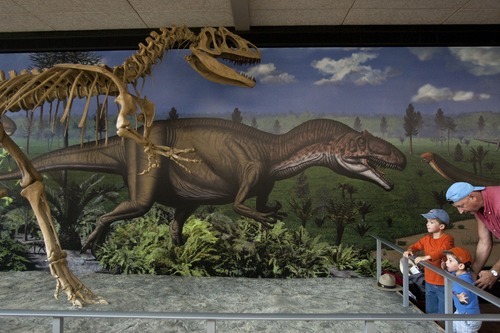
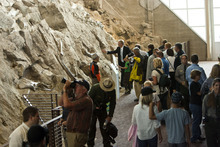
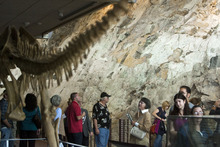
"I like how you get to touch and feel and seeing what dinosaurs were really like," said 9-year-old Dasha Spencer of nearby Neola.
Fourteen-year-old Grayson Haug of Pullman, Wash., also enjoyed being able to touch dinosaur bones.
"I've never seen anything quite like this," he said. "I don't think you to get to see or feel things that are still here and have been for millions of years."
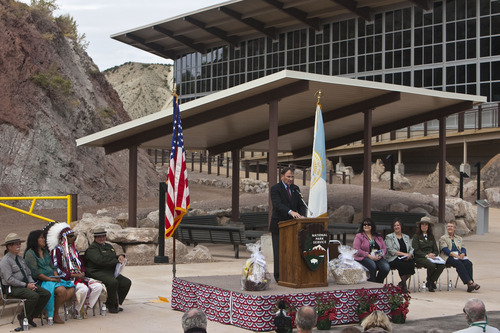
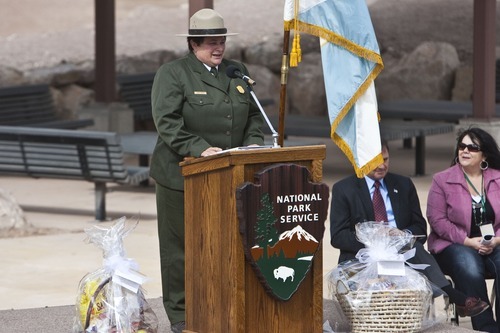
Utah Gov. Gary Herbert joined Uintah County leaders, National Park Service officials, area school children, Ute tribal elder Clifford Duncan and Diane Iverson, the granddaughter of paleontologist Earl Douglass.
Douglass found eight tailbones of a sauropod sticking out of the ground at this exact site in 1909, exploring for the Carnegie Museum in Pittsburgh, a facility that still displays many dinosaurs found in Utah.
"I hope that the government for the benefit of science will uncover a large area, leave the bones and skeletons in relief, and house them," he wrote in 1923. "It would make one of the most astounding in instructive sights imaginable."
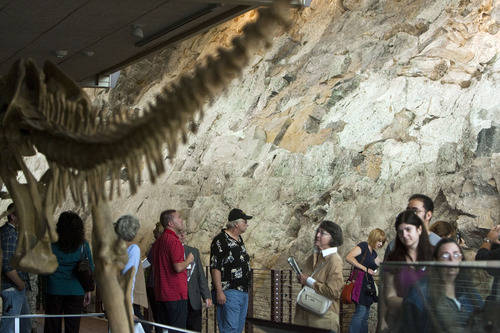
That is exactly what happened in 1958, when the Quarry Exhibit Hall originally opened and protected hundreds of exposed dinosaur bones with a cover. But, in 2006, what was known as the Dinosaur Quarry Visitor Center was closed because of structural instability. The building was in danger of collapsing.
Iverson said that when the building closed, the Douglass family was devastated and never expected it to open again. She said she thought it was the end of her grandfather's dream.
"How excited we are to see this magnificent building and the amazing job people did," she said. "We want to say thank you to all of those who made it possible."
Monument superintendent Mary Risser, who made the decision to close the building, said the park service had tried to get funding to fix the building's numerous structural problems since the 1990s, but it lost out to funding for other park service projects.
But the plans were done, making the project "shovel ready" when the American Recovery and Reinvestment Act of 2009 — commonly called the stimulus package — passed Congress. The new visitor center and Quarry Exhibit Hall received $13.1 million in funding, but came in $4 million under budget.
Herbert said the Uintah Basin was an example of an area that can produce jobs in the oil and gas industry and still preserve natural vistas and remain a tourist destination. He said his main focus was to grow Utah's economy and that tourism is a big part of that effort.
The governor made the connection between the dinosaurs that roamed this area 149 million years ago and the deposits of oil nearby, saying both were connected.
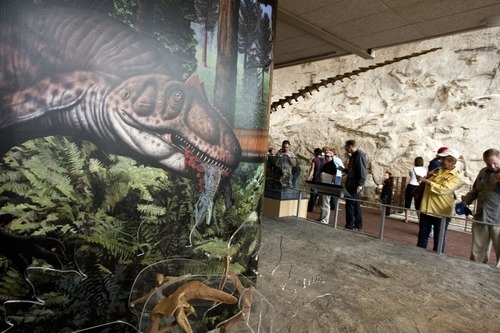
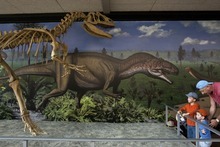
Dan Chure, the monument's paleontologist for 32 years, called the wall "a library of dinosaur bones" that has provided specimens for museums around the United States that have been viewed by millions of people.
Architects managed to retain much of the unique design of the original quarry building, though they eliminated the laboratory, visitor center and offices that were once part of the complex. They anchored the building into solid bedrock.
Park workers have been scrambling for the past few weeks to dust off and clean the famous bone displays on the wall.
The new visitor center — which features exhibits, a theater and bookstore — will be open daily from 9 a.m. to 5 p.m. It serves as the departure point for shuttles to the Quarry. During the offseason, the park staff will provide access through car caravans. Call 435-781-7700 for times for Quarry tours.
From now through Sunday, free shuttles will operate from the center. Entry fees of $10 per vehicle will not be collected until Nov. 1. The Utah Field House of Natural History State Park Museum in Vernal will also be offering free admission through Sunday as part of the reopening celebration.
Quarry facts at a glance
P The Quarry Visitor Center and Quarry will be open from 9 a.m. to 5 p.m. daily. Entrance fees of $10 per vehicle will be charged starting Nov. 1. For information, log on to http://www.nps.gov/dino or call 435-781-7700.
President Woodrow Wilson established Dinosaur National Monument as an 80-acre site on Oct. 4, 1915, to protect "deposits of Dinosaurian and other gigantic reptilian remains of the Jurassic era." President Franklin Roosevelt used his power under the Antiquities Act to expand Dinosaur National Monument to more than 200,000 acres in 1938 to preserve and protect the canyons of the Green and Yampa Rivers.
The Quarry Exhibit Hall originally opened in 1958 as the Carnegie Quarry Building.
Dinosaur National Monument visitation peaked in 1993 at 530,000 when people came to visit the real Jurassic park. Visitation dropped to just under 200,000 people after the visitor center closed.
The quarry and visitor center were closed in 2006 because of a structural instability. The building was in danger of collapsing.
A new visitor center and the Quarry Exhibit Hall were built through the use of $9.1 million acquired through the American Recovery and Reinvestment Act of 2009.
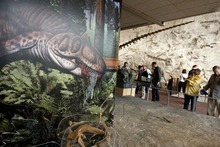
The new Quarry Exhibit Hall consists of two levels, is wheelchair-accessible, covers 10,500 square feet and protects more than 1,400 dinosaur bones exposed along a 150-foot-by 50-foot wall.